September 25, 2025—Why we love to "people watch," a vicious new bacterial infection is surging in hospitals, and an unproven drug for treating autism.
—Andrea Gawrylewski, Chief Newsletter Editor |
|
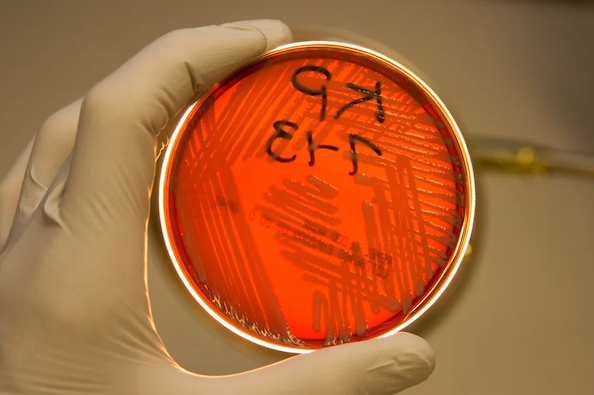
A petri dish growing Klebsiella pneumoniae bacteria, one species that can become resistant to last-resort antibiotics. Eric Carr/Alamy Stock Photo |
|
Macaques. Whitworth Images/Getty Images |
|
Our drive to “people watch” may be an important evolutionary trait. Chimps and macaques, our primate cousins, express social curiosity, too. In one experiment, researchers played human children and chimps videos showing members of their respective species. Both groups preferred watching social scenes compared to videos with solitary individuals. Likewise, in a different study, long-tailed macaques preferred watching videos of their peers engaging in more aggressive interactions than peaceful ones, and paid more attention to videos of familiar individuals.
Why this is interesting: In ancient humans and other primates, reputational damage can bar access to food and mates, incite physical confrontations and, in extreme cases, lead to potentially fatal ostracism from the community. With so much at stake, primates evolved to keep a close eye on each other. “Modern humans retain this keen attention to other people’s social interactions as an evolutionary adaptation,” says Gillian Forrester, who studies comparative cognition at the University of Sussex in England and was not involved in either study—so people watching might just pay off.
What the experts say: “These findings demonstrate that social information is important, rewarding and valuable for humans and other primate species,” says Laura Lewis, a comparative and developmental psychologist at the University of California, Santa Barbara. “It suggests that social information was also important for our shared primate ancestors who lived somewhere between five million and eight million years ago and that for millions of years it has been adaptive for primates to gain social information about those around them.” — Andrea Tamayo, Newsletter Writer
|
|
Between 2019 and 2023, there was a 461 percent increase in the infection rate of a certain bacteria in the group Enterobacterales that can thwart many antibiotic treatments, according to a report released this week by CDC scientists. Such infections are resistant to carbapenems, a powerful class of drugs used to treat severe multidrug-resistant bacterial infections, including pneumonia and bloodstream, bone and urinary tract infections.
Why this matters: Carbapenem-resistant Enterobacterales (CRE) infections are notoriously difficult to treat and can be fatal: In 2020 alone, CRE caused about 12,700 infections and 1,100 deaths in the U.S. People receiving care and treatment in hospitals and other health care facilities are most at-risk for contracting CRE infections. The antibiotics that work against CRE are only available intravenously.
What the experts say: “We are concerned because there is risk that this could spread into communities, meaning that common infections like urinary tract infections that are usually treated with the oral antibiotics may increasingly need to be treated with the IV antibiotics and require hospitalization,” says Danielle Rankin, a co-author of the new report and an epidemiologist at the CDC.
|
|
|
|
|